Ranabaali Review: An earnest period piece anchored by Vijay Deverakonda's transformation, undermined by an exhausting second half and inconsistent musical score.
★ 2.5/5 · hittubomma rating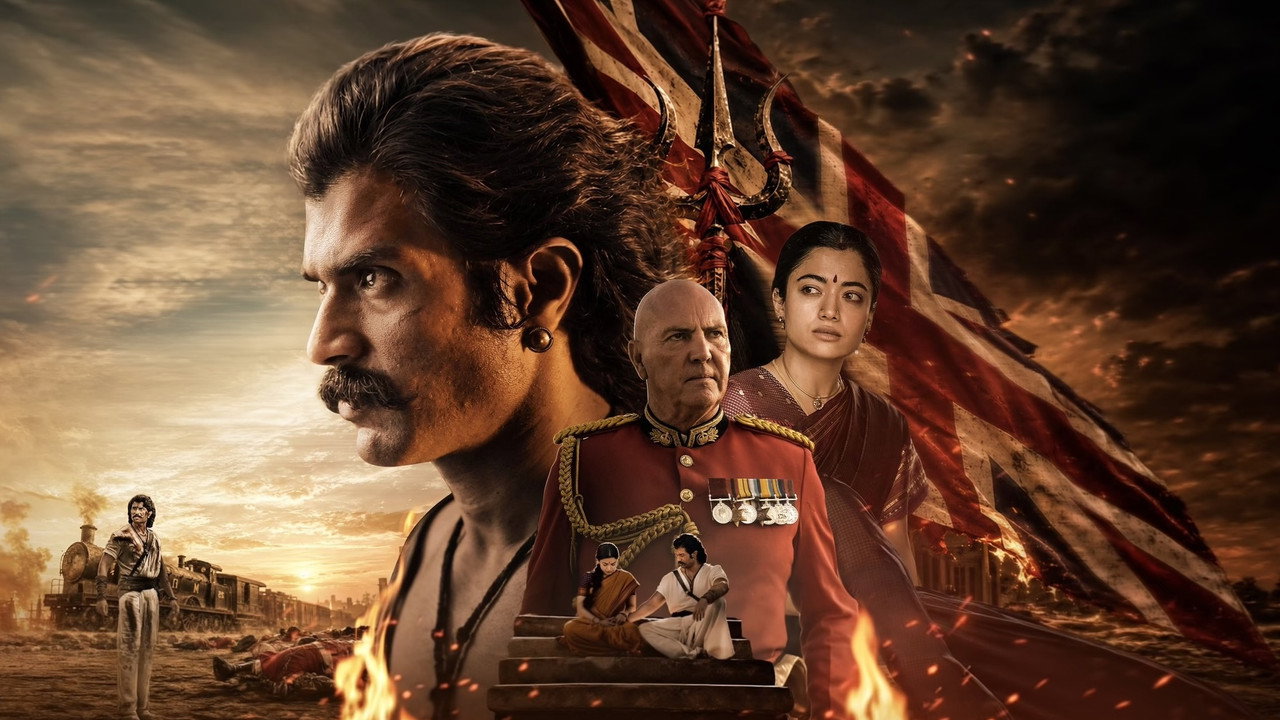
Ranabaali brings together Vijay Deverakonda and Rashmika Mandanna for their first collaboration since Geetha Govindam and Dear Comrade, now playing onscreen spouses in director Rahul Sankrityan's ambitious historical drama. Set against the brutal 1854-1878 Rayalaseema famine during British colonial rule, the film chronicles how a local warrior transforms into a rebel leader fighting oppression and starvation. Backed by Mythri Movie Makers with Netflix as its streaming partner, this period piece aims for grandeur but stumbles under its own weight.
The narrative unfolds in 19th-century Rayalaseema where protagonist Singanamala Bobbili Ranabaali is a hot-headed member of the Palegaadu ruling class, destined by legend to live for two pushkarams. His arranged marriage to the gentle Jayamma attempts to temper his violent nature. When a devastating famine ravages the region under British commissioner Sir Theodore Hector's exploitative policies, Ranabaali witnesses unbearable suffering and gradually transforms into a fearless rebel opposing colonial brutality.
The first half methodically establishes the world—the feudal system, colonial oppression, and the personal dynamics between the lead pair—creating genuine engagement through period detail and their chemistry. The interval delivers a satisfying turning point. However, the second half becomes relentlessly bleak, piling sequence after sequence of suffering, violence, and grief without adequate emotional payoff, making the extended runtime feel oppressive rather than impactful.
Vijay Deverakonda makes a compelling departure from his urban romantic persona, delivering a performance rooted in authentic commitment. His physicality—from the slovenly drunk of early scenes to the fierce warrior in battle sequences—showcases dedicated preparation. Though his Rayalaseema dialect feels slightly strained initially, it settles convincingly as the film progresses. His subtler work, particularly through eyes and facial expressions during pivotal moments like the interval twist and climax, reveals genuine emotional depth and captures the anguish of a conflicted leader.
Rashmika Mandanna excels as Jayamma despite limited screen time, bringing warmth and grace to scenes opposite Vijay in the opening half. Her character provides emotional contrast and grounding to the narrative's heavier elements. Her reappearance in the final stretch serves as an important emotional anchor. Arnold Vosloo embodies the menacing colonial oppressor effectively, while supporting actors including Lal and Eshwari Rao make their limited appearances count.
The film's technical presentation reveals significant craft in its visual storytelling. Cinematographer Jishnu Bhattacharjee's frames authentically capture the parched landscapes, ancient forts, and rural settlements of 19th-century Rayalaseema, with the arid geography becoming almost a character itself. The production design deserves particular praise for convincingly rendering the period setting without relying on obvious studio artificiality—locations feel genuinely inhabited rather than constructed.
Where the technical execution falters critically is in its musical components. The score by Ajay-Atul fails to elevate emotionally significant moments, lacking the powerful orchestration needed to amplify dramatic confrontations and moments of heroic triumph. Only a melodic duet between the leads registers memorably. The film's near-three-hour runtime, while justified thematically, tests viewer endurance, with editing in the second half requiring tighter trimming to maintain narrative momentum and emotional engagement.
Ranabaali presents an admirable historical epic centered on a transformative performance by Vijay Deverakonda, grounded in period authenticity and visual grandeur. The film's first half successfully engages viewers through character development and atmospheric world-building. However, the second half's relentless bleakness, combined with a weak musical score and bloated runtime, undermines the emotional payoff the narrative promises. While the film earns points for ambition and sincere execution, it proves unable to sustain its dramatic momentum across nearly three hours, resulting in a viewing experience that exhausts rather than exhilarates.
 O.M: Operation Mole review
 Aakasamlo Oka Tara review
 ENE Repeat review
 DNK review
 Itllu Arjuna review